
The process window is the parameter range where an injection-moulded part is repeatedly produced within specification. Knowing it before production tooling reduces uncertainty, avoids late adjustments and turns the prototype into process learning.
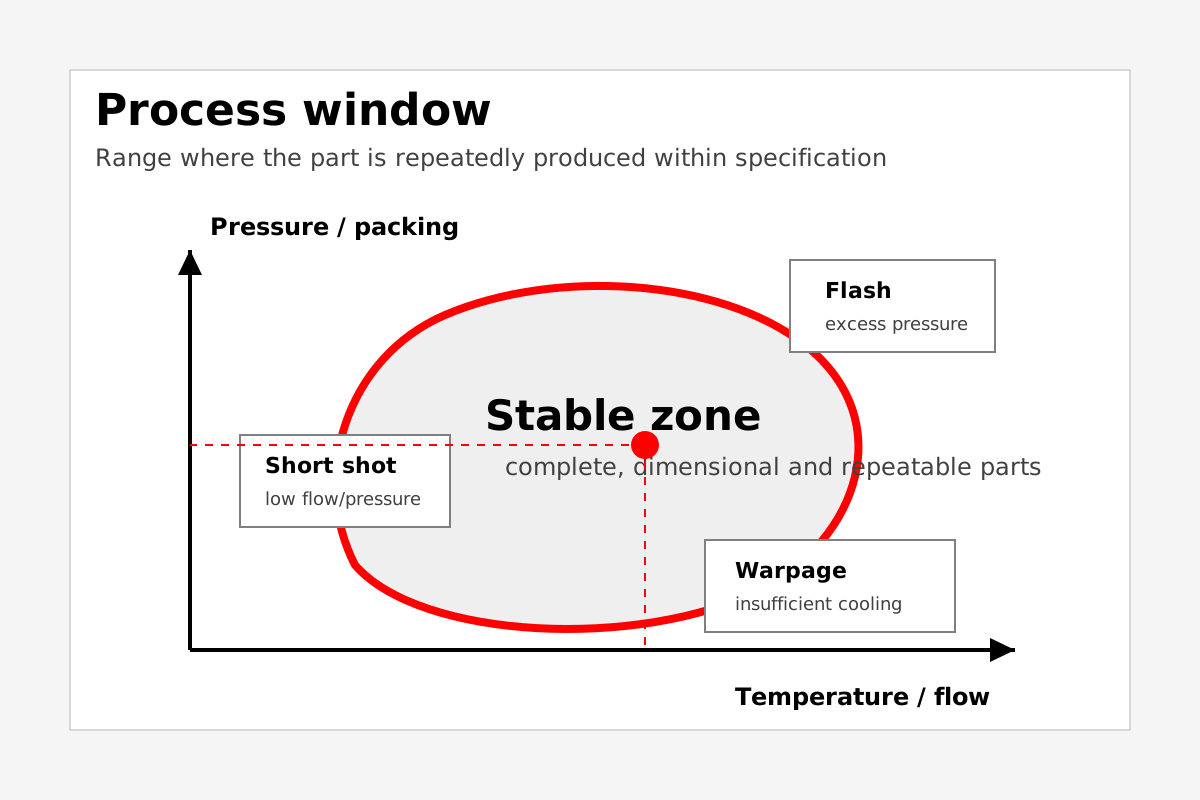
The process window in injection moulding is the range of parameters within which a specific part, material and mould combination repeatedly produces acceptable parts.
It is not a complete number taken from the material datasheet. The datasheet gives recommended ranges, but the real window depends on part geometry, gate position, mould design, machine behaviour and the quality criteria that must be met.
Key idea: a useful prototype does not only prove that the part exists. It should help identify the temperature, pressure, speed and timing range in which the part can be moulded without defects and with dimensional stability.
What defines the process window
The process window comes from the interaction between geometry, material and mould. Change any of them and the stable zone can move.
A thicker rib, a thin wall, a gate change or a material with different viscosity can make a previously acceptable process unstable. That is why the window is not purely theoretical: it is confirmed by moulding, measuring and observing defects.
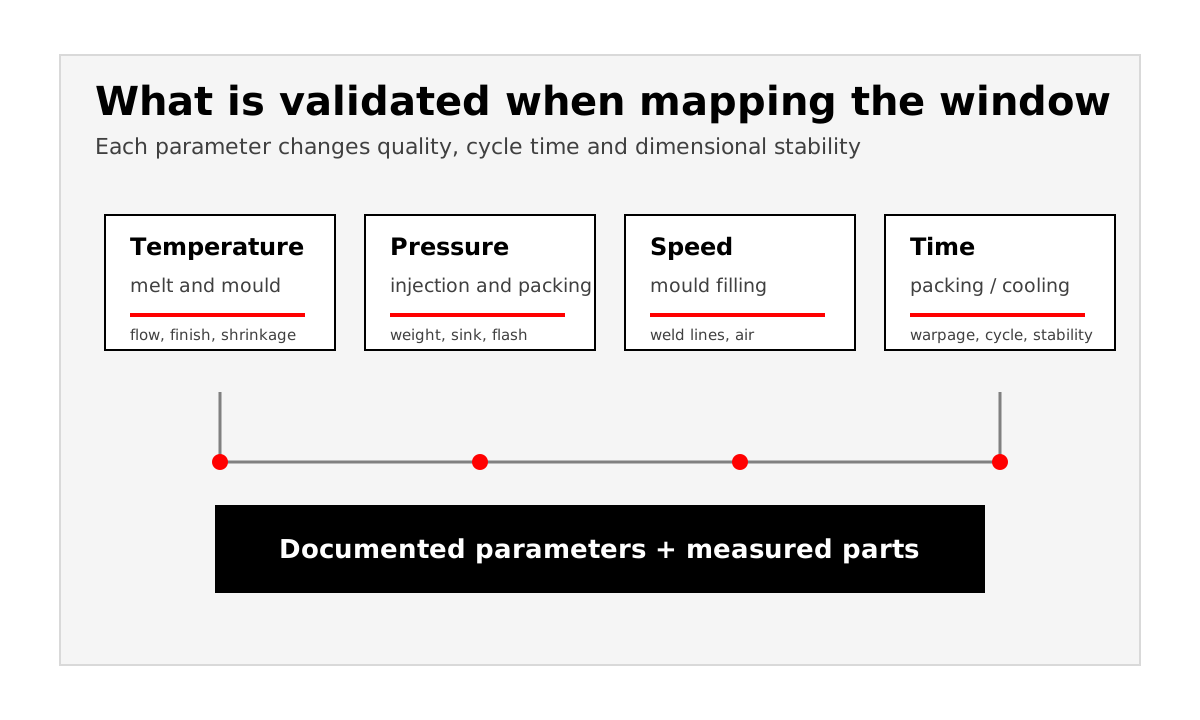
In practice, the variables commonly analysed include:
- Melt and mould temperature: they affect flow, surface finish, shrinkage and cycle time.
- Packing pressure and time: they influence final filling, part weight, sink marks, voids and dimensional stability.
- Injection speed: it changes the filling pattern, weld lines, air traps and internal stresses.
- Cooling time: it affects warpage, stiffness at ejection and dimensional repeatability.
Why CNC or 3D-printed prototypes cannot define it
A CNC prototype can be excellent for checking geometry, ergonomics or interferences. A printed prototype can accelerate design iterations. But neither reproduces the filling, packing and cooling process of an injection-moulded part.
CNC does not create flow fronts or weld lines. 3D printing has its own layer logic, anisotropy and material behaviour. In both cases, the part can teach you about shape, but not about the injection moulding process window.
The window appears when molten material enters a cavity, is packed, cools and is ejected under specific geometry and processing conditions. Without that cycle, the central data point is missing.
What happens outside the window
When the process moves outside its stable zone, defects are not random. They are usually linked to a physical process cause.
- Low temperature, low pressure or insufficient speed can produce short shots or incomplete detail.
- Excessive pressure, insufficient clamping or worn mould surfaces can produce flash.
- Insufficient packing or unbalanced cooling can produce sink marks, voids or dimensional variation.
- Uneven cooling or premature ejection increases the risk of warpage and loss of stability.
For that reason, the process window is not just a parameter sheet. It is a documented relationship between machine settings and part outcome.
How to define it from an injection-moulded prototype lot
An injection-moulded prototype lot turns development into a controlled experiment. The team can vary parameters, observe defects, measure parts and document which combinations produce acceptable results.
The goal is not to find a single magic point, but to identify a robust range. If the part only works inside a very narrow setting, the production mould starts with a clear risk: small changes in material, machine or temperature may push the process out of specification.
The minimum useful record includes:
- Machine parameters used for acceptable parts.
- Limits where visual or dimensional defects begin.
- Sensitive dimensions and measurement results from the lot.
- Observations on filling, weld lines, flash, sink marks, warpage or ejection.
- Material condition, drying data and batch used in the trial.
Why it matters before production tooling
Reaching production tooling with a documented preliminary window reduces uncertainty. It does not remove production start-up work, but it prevents the team from starting blind and shows which variables are truly sensitive for that part.
In validation-heavy projects, the preliminary window also supports OQ/PQ planning, CTQ definition and later capability studies. It does not replace formal validation on the production mould, but it brings forward technical learning that would otherwise appear too late.
The practical question: before approving production tooling, do you know the range where your part is acceptable, or only that one prototype had the right shape?
FAQ about process windows
What is a process window in injection moulding?
It is the range of parameters in which a specific part, material and mould can repeatedly produce parts that meet the defined quality criteria.
Does the material datasheet define the window?
Not completely. The datasheet gives recommended ranges, but the real window depends on geometry, mould, machine, gate position and the dimensional or functional requirements of the part.
Why is it important at prototype stage?
Because it identifies defects and sensitive variables while there is still room to modify geometry, inserts or process strategy before production tooling.
How is it related to Cpk?
Cpk measures process capability against tolerances. A narrow window may mean the process needs tighter control, but it does not by itself demonstrate capability, which is why it is useful to understand the window before formal production validation.
Cross-checked official technical sources
- ISO 294-1:2017 - Reproducible injection-moulding conditions and reporting
- ISO 294-4:2018 - Determination of moulding shrinkage
- FDA CDRH - Process Validation Module
These sources support the general principles. Applicable acceptance criteria must be defined for the material grade, design, process, sector and agreed requirements.