
Lightweighting a metal part with reinforced thermoplastic requires validating stiffness, fibre orientation, creep, assembly and tolerances with the real process.
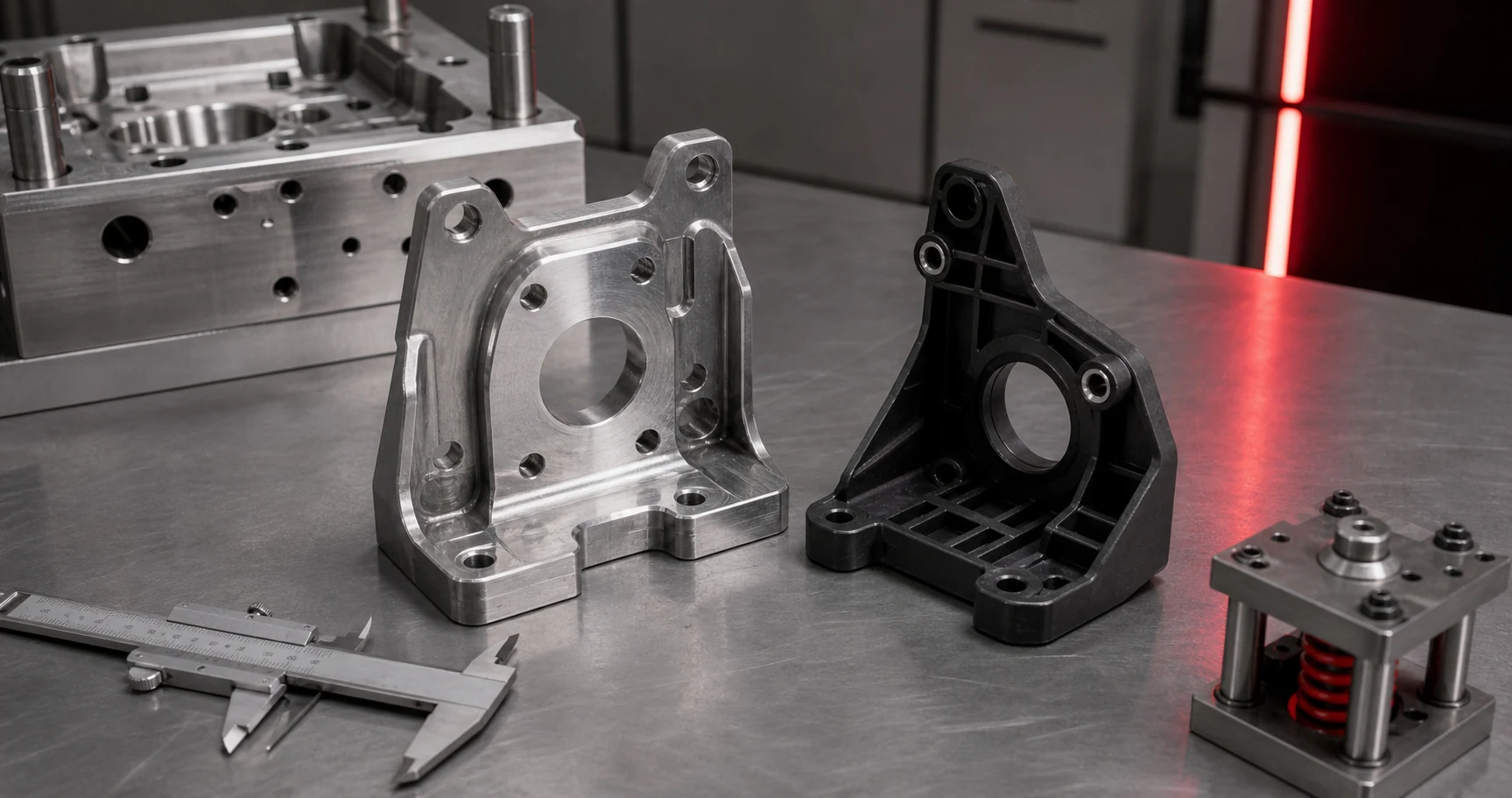
Key idea: the prototype must answer a specific technical question, not only produce a visible part.
It is not copying metal into plastic
Replacement requires redesign: wall sections, ribs, radii, load points, bushings, inserts and flow orientation change the structural logic.
The material is anisotropic
In fibre-filled materials, strength depends on how fibres orient during filling. Gate, geometry and process drive that orientation.
What to validate before series
Load, deformation, creep, temperature, assembly, tolerances, tightening torque and interfaces with adjacent metal parts.
Frequently asked questions about metal replacement
Can metal be replaced by plastic without redesign?
Usually not. Reinforced thermoplastic requires reviewing wall thickness, ribs, load points, inserts, creep, temperature and fibre orientation.
Why does fibre orientation matter?
In reinforced materials, stiffness and shrinkage depend on fibre orientation during filling. That orientation depends on flow and gate position.
What should the prototype validate?
Load, deformation, assembly, tolerances, creep, temperature and interfaces with adjacent metal parts.